The last couple of weeks have been a blur, and to be completely honest, I can’t believe how much I have learned and accomplished in this time. It feels like everything I have been working towards, both in Project Green and beyond, is starting to build into something much bigger. I have taken a leap into different responsibilities and participated in events at which entirely changed my perspective on everything. This has been one of the most exciting seasons yet. Sometimes it is a little overwhelming, but more than anything it is honestly super inspiring to see everything coming together and realizing I am another positive change-maker in my community.
One of the coolest updates is that I was elected Treasurer of Project Green! I feel like this is a significant upgrade for me and am excited to embrace the new challenge. As Treasurer, I will be responsible for all the finances for the club, something I’ve never done before but I am excited to learn. I already have some ideas about how we can fund our club’s compostable cup initiative. This is one of the major undertakings we have been working on as a club, which is to replace plastic water bottles with compostable cups. Now I get to be a part of the process to administer the funding behind the initiative. I think it’s going to work out well, and I will be able to learn how to manage a budget and develop ideas on how we will fund projects like these.
And in regard to that compostable cup program, it’s been going quite well! Recently, our club went to a school board meeting where data was shared regarding the success of our initiative and the outcome reports were very promising. The report showed that we had actually been able to reduce plastic water bottle sales at our school. It is really gratifying to see positive impact from an effort we started. The evidence we are going to show how seemingly insignificant adjustments to the way we do things can influence behavior change, including providing just another option rather than plastic. This gives me more energy to continue onward and look at ways to cut back, and get more of the community engaged in being mindful in reducing waste.
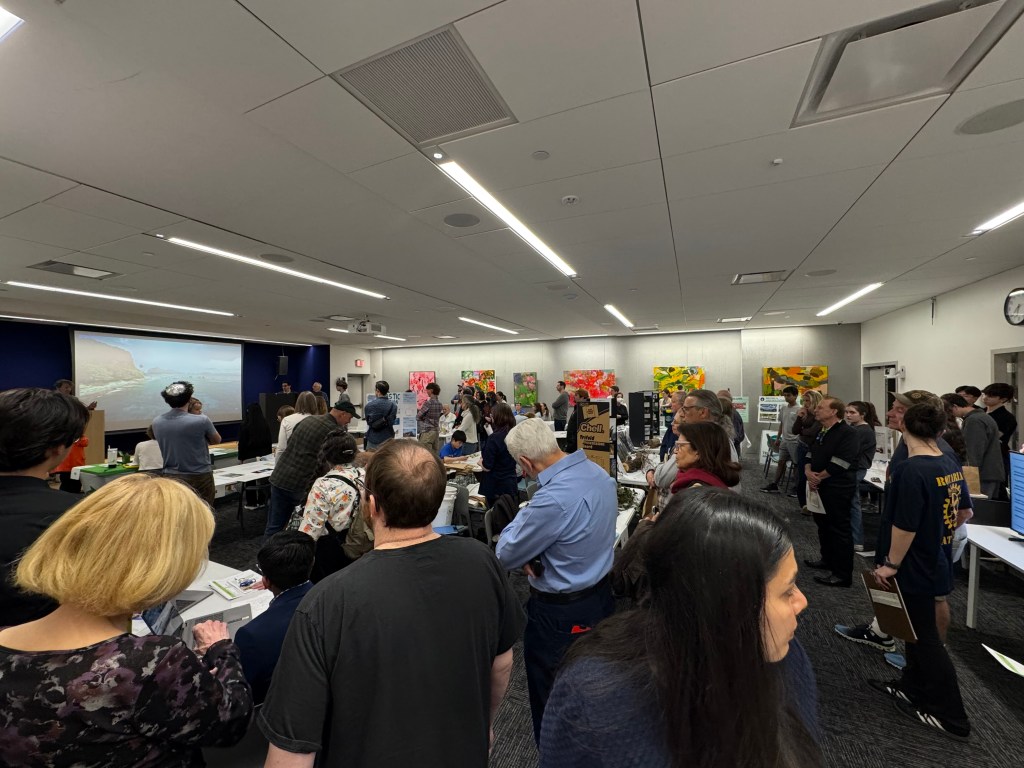
This past Tuesday, April 22 was Earth Day, and it felt like a big milestone for me. As part of Project Green, we were at an Earth Day Expo at our local library and it was one of those days where everything just fell into place. We had a booth and presented our compostable cup project, showcased what we’ve done, and taught folks about how composting can be a very effective, low-barrier waste diversion option. It felt really powerful to see people get excited about what we’re doing and it was exciting to realize that there is a lot of momentum behind something that seems like one of many components to big solutions. And then the best part was interacting with other local organizations who were there! I learned about all kinds of different sustainability projects, from sustainable transportation solutions to ideas for making gardening more sustainable. I even met a guy who runs a nonprofit which supports sustainable gardening practices and he is looking for volunteers this summer – I am strongly considering signing up! It is all about expanding my knowledge and skills and it was very inspiring to meet people doing such amazing work.
To make things just a little bit more exciting, New York Congressman George Latimer and our Mayor were both at the expo too! It was actually pretty surreal to be part of an event where local leaders were showing up to support sustainability, and it again reinforced my sense that the work we’re doing with Project Green is well within a more significant movement. Their participation in the event reinforced the significance of this kind of work and the ability of grassroots efforts to be impactful if we’re supported by our local leaders.
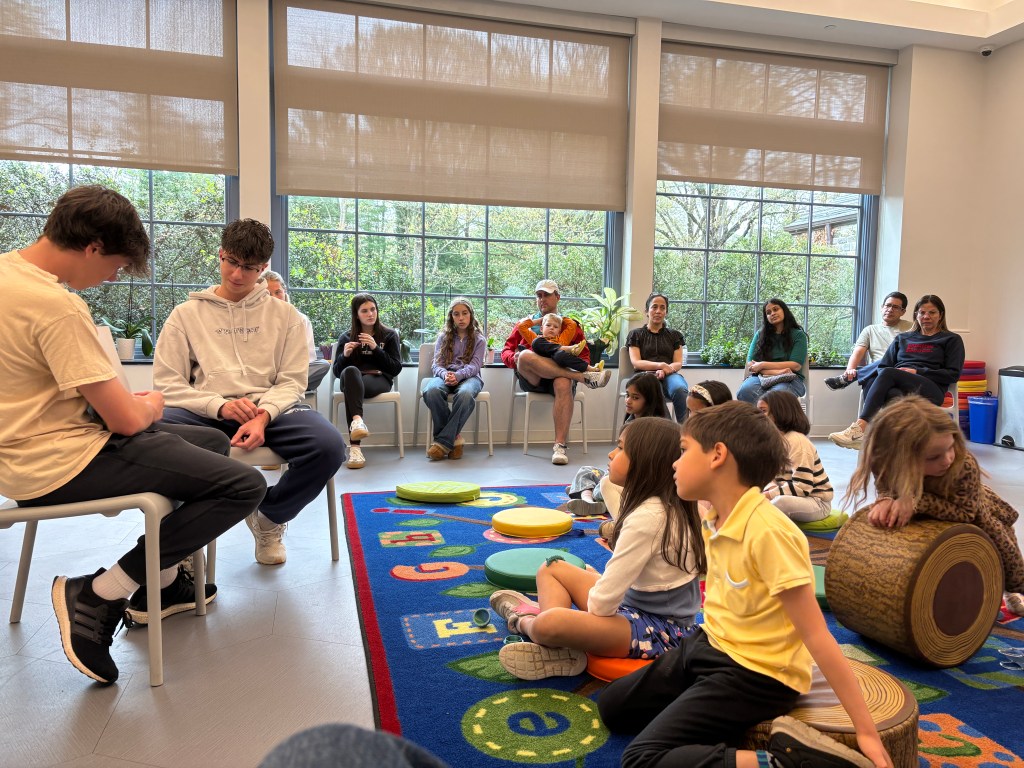
In addition to hosting the expo we also had a children’s Earth Day reading event at the library where we read books like The Lorax and had a discussion with the kids about why it is important to be kind to the environment. What I loved about this event was how we made sustainability something that was fun, realistic, and approachable to the kids. We weren’t just giving them information but were using storytelling to excite their imaginations and get them to think about how they could make a difference in their daily lives. To be honest, it was pretty refreshing to work with the kids. They were so curious and many of the questions they asked are ones I had not even thought of! The parents were really happy about what we were doing, and some said they wanted to attend more events in the future. We are even considering creating a website, if not a email list for Project Green, so that families can sign up if they want to be updated on all of our future projects. So this is something we will definitely be working on in the not too distant future.
Looking ahead, we have another nature center event in a week, and I am very thrilled about it! The event will be a kids’ workshop, where the kids will make their own compostable plant cups. The kids will have an engaging tactile experience, and be able to get their little fingers dirty, while learning about the value of composting and sustainability at a younger age. I am excited to do this because they express a lot of joy and I trust that this will be very special for everyone involved. Once the event happens, I will update the blog on how it went and what we accomplished, but at this moment, I am simply eager to share an opportunity to engage younger kids towards protecting the environment!
As a personal interest, I recently became a volunteer at our local environmental center a few times a month. My primary responsibility is to take pictures of the different flora and fauna on the center grounds and do slightly more research on what I’m taking pictures of. It really has been so rewarding to be outside exploring the natural environment and learning more about the species that inhabit it. After taking my pictures I simply send them along with research notes, and they’re published on the center’s website. It is honestly such a straightforward and fulfilling contribution, and I’m learning so much about local ecosystems. The volunteering has also provided me with an appreciation for how important it is to save the natural areas right in our own backyard.
I have also started doing research, in conjunction with the TOPS SCHOOL Open Science Team. I have joined a Working Group for Disaster Damage Assessment related to the Maui flood disaster from January 2021. This group has been tasked with taking the satellite and drone images from this event and compiling in a lesson format that is useful for others to use and uploaded to the TOPS website for others. The focus is to quantify the damage from the disaster and then visualizing and presenting the data, using maps and graphs, so the general public can understand the impacts of this disaster. I am learning a considerable amount about how data science can be used concerning environmental issues and how technology can be utilized to build understanding around catastrophic events. This is a whole new world for me and I am excited to see how this project develops.
With Project Green, volunteering, and working on research with TOPS, I feel like I’m keeping a lot of balls in the air related to sustainability. Nonetheless, it is all very satisfying. I am learning that sustainability is not just one thing; it is community action, education of others, and using technology to produce even greater impacts. It is a broad field with lots of opportunities, and I am excited to see where I go from here. There is one big lesson I have learned recently, however, and that is that little actions matter, and when we come together, we can create big changes.
 Unwrapped Earth