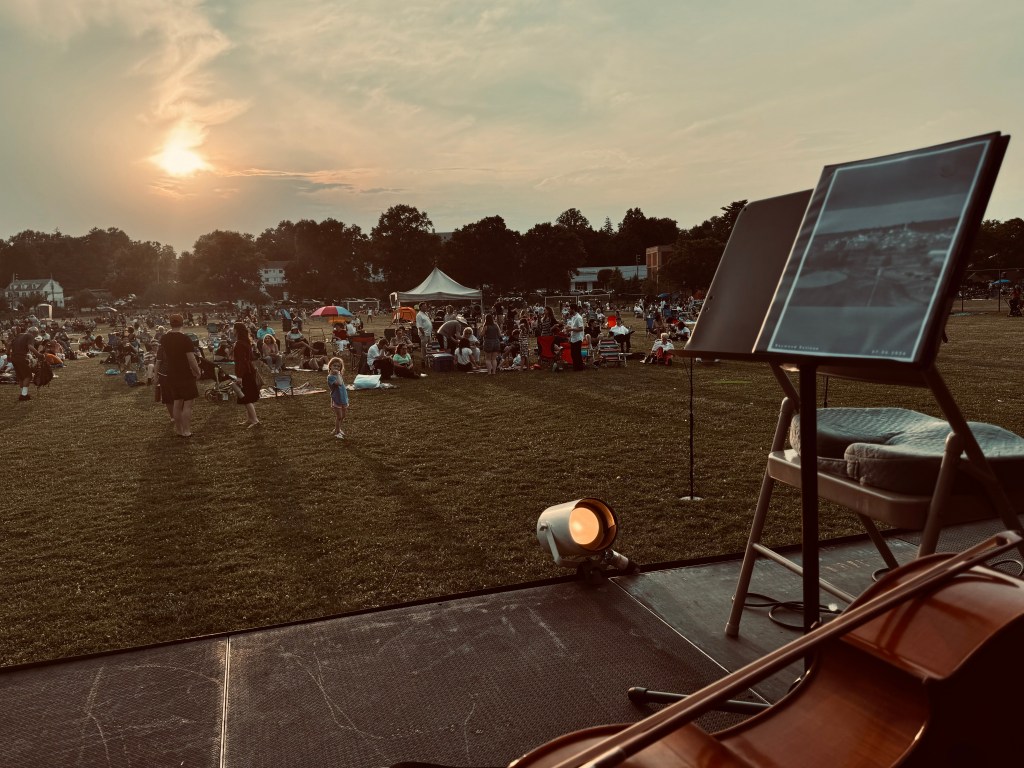
I’ve been playing the piano and cello for as long as I can remember – classical music mostly, though I’ve been trying to play some of the hit songs that I enjoy listening to recently. There’s something about those instruments that to me is like a conversation, like storytelling without words. Brahms, Mozart, Chopin, Rachmaninoff, the way their notes sound – it’s rather comforting. But I’m also the kind of individual who’s enthusiastic about listening to every kind of music. Pop, rap, hip-hop, indie – I soak up the differences, the vibe, the manner in which the voices sing along and the rhythms make me stand up and dance.
This past summer, I came across a free Coursera course titled Music as Biology: What We Like to Hear and Why. It’s an online course, so I could complete the lessons & modules at my own pace, which was perfect for me to fit into my schedule whenever I wanted. I should note, this isn’t a typical music theory class – it doesn’t teach you how to recognize pitch and intervals, voice leading, or all the different types of chords in music. Instead of analyzing music as art, it does so from a biological and scientific perspective, studying why we like certain sounds, how our bodies and brains respond to music, and what music reveals about being human. What I was surprised by was how deeply it would make me think about listening to music – not just noise, but as something alive, something biological. What I did not expect was just how deeply it would change the way I hear music – not just as sound, but as something that breathes.
I learned that my ears are magic translators. They don’t just register sound – they break it down, sort it out into tone, pitch, loudness, and timbre. Timbre is what makes a trumpet sound like a trumpet, and a piano sound like a piano, even if playing the same note. It’s the unique colors in the sound – the subtle vibrations that give each instrument its own personality.
The one thing that blew my mind was how music and speech are cousins. The rise and fall of a melody is merely an imitation of how we talk, how our voices convey emotion. That’s why a major scale can be happy and upbeat, like a laugh, and a minor scale can be sad or stressful, like a sigh. Music is not sound – it’s the shadow of human emotion.
I learned about the harmonic series, how it’s a natural phenomenon that explains why some notes harmonize well. And tuning systems – why equal temperament pervades music today. It’s a compromise, a way of making things sound nice no matter what key. It’s math and biology, wrapped up in the sounds we love.
What’s crazy is how universal these are. Other cultures, other instruments – but all of us hear the same patterns, the same scales, because our brains are structured that way. Music is biology and culture, both concurrently working together.
And the emotions! Hearing music puts dopamine into my brain – the same stuff that lets chocolate or laughter make me happy. When I hear a sad Mozart piece in a minor key, it doesn’t merely sound sad, it feels sad. I discovered music uses the same emotional language we use day to day, in voice and song, all around the globe.
This class made me think in ways beyond human music, too. There is sound all around nature – birds singing, whales vocalizing, insects buzzing. They utilize sound to live, to communicate. Our music is included in that rhythm, included in the beat of the world. It’s a reminder that biology isn’t just in the laboratory or the woods – it’s in the songs that touch us.
As someone who loves the environment, this was like discovering a new bridge between two parts of myself. Music and nature both hold patterns, cues, stories to be told. Science reminds me of the unseen strings that connect the music I play and listen to, with the world I adore. For me, photography, as with music, is a form of art – capturing the hidden moments, the feelings, and the quiet sensuality of this world. I catch light and shadow through the lens as music catches sound and emotion. Both remind me how intertwined art and science are and can assist us in getting to know and appreciating the intricacies of life surrounding us.
Now that I get to hear the music that I love, or play the piano, I feel like I’m part of something bigger – a living breathing system of sound and emotion and life.
Music is not notes or noise. It’s biology. It’s culture. It’s feeling. And it’s in all of us – “the universal language of mankind”, as some say.
This summer, I’m not just hearing – I’m learning to feel the science behind the rhythms that define me.
 Unwrapped Earth
Leave a comment