“three weeks, two field trips, and one planet to protect“
This past month, I took a class called Environmental Studies: Designing a Sustainable Future at Columbia University’s Precollege Programs – taught by the incredible Dr. Nicola Barratt. I went in thinking we’d just be reading articles and building case studies. And sure, we did some of that. But what I didn’t expect was how real it would feel – how much I’d see, hear, and experience that stayed with me long after class ended.
Over the three weeks, we dove into the science and systems behind sustainability: food, water, energy, equity, climate policy. But the two field trips we went on – one to the Javits Center and one to the Newtown Creek Wastewater Treatment Plant – were what grounded it all. I’d heard words like “green infrastructure” and “resource recovery” before, but now I had actual images in my head. Giant anaerobic digesters. A rooftop orchard. Bees. Wastewater. Apple trees. Biogas. LED lights. All of it, tangled together in the story of how New York City is trying to live lighter on the planet.
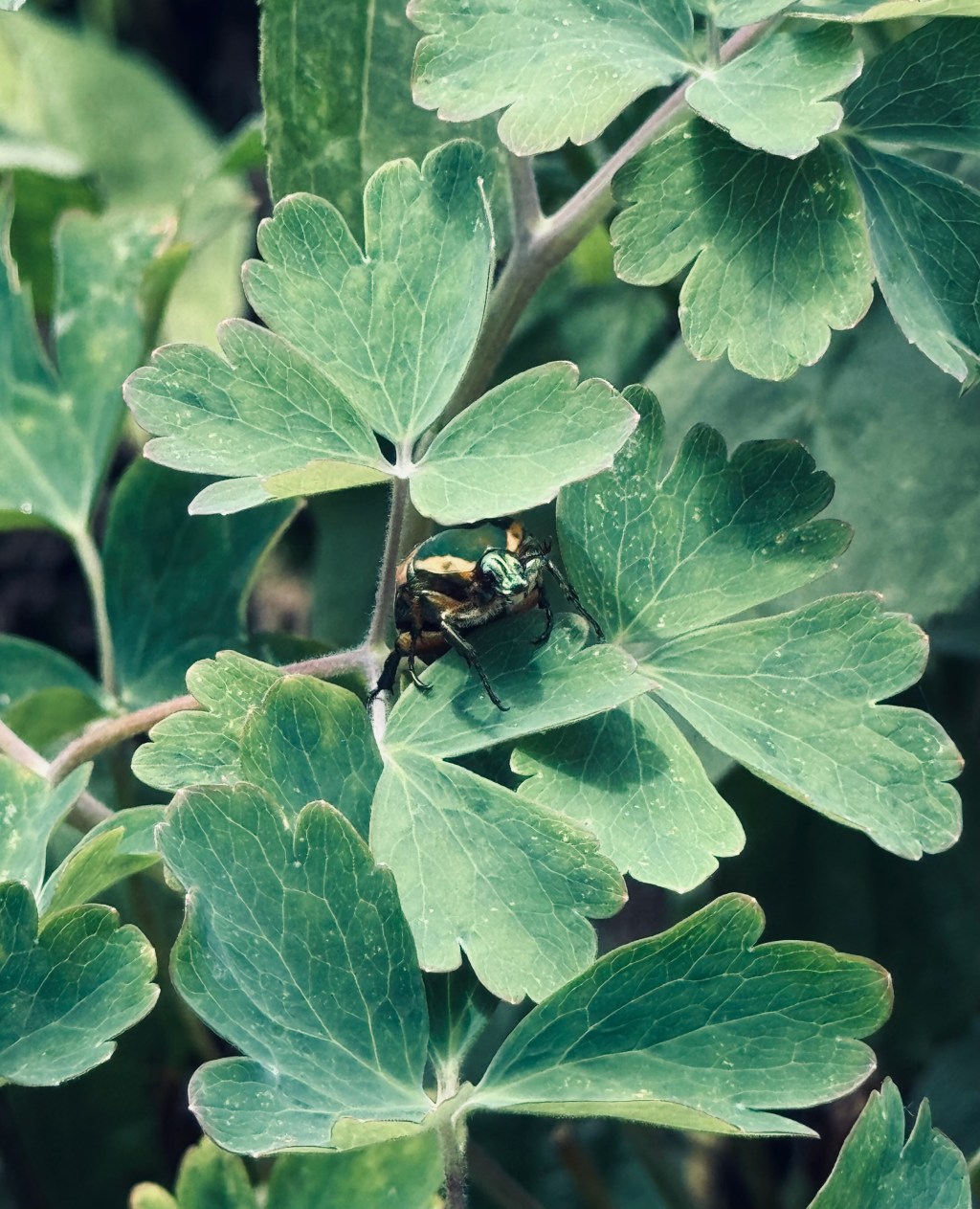
We also took walks around campus and outside of campus – sometimes to get outside and reset, other times to look more closely at the urban ecosystem around us. Our professor, of course, wanted these moments to meaningful, and introduced us to an app called iNaturalist. At first, I thought it was just a plant ID tool. But it’s actually so much more than that. With every photo you take – of a flower, a bug, a mushroom, a tree – you’re not just naming it. You’re submitting it to a global database of biodiversity. Your small moment of curiosity becomes part of something much bigger: a way to track species, monitor ecosystems, and support environmental research.
The app changed the way I look at my surroundings. It slowed me down. Made me notice more. I started taking pictures of plants pushing through sidewalks, beetles on benches, lichens growing on forgotten corners of brick. And I wasn’t just observing – I was participating. Contributing to something meaningful, just by being present and paying attention.
And in a strange coincidence (or maybe not a coincidence at all), I was added to the Sheldrake Environmental Center’s 2025 Backyard BioBlitz – a project where I’ll be using iNaturalist in a similar way to help support local research and documentation. As a Nature Reporter and volunteer at Sheldrake, this felt like such a full-circle moment. The BioBlitz encourages participants to photograph uncultivated nature – wild things that grow or move or land without human intervention – in places outside of Sheldrake itself, to help expand their research radius across my county.
So whether I’m walking the city or wandering the woods in my town, I now carry this quiet intention: to document what I see, not just for myself, but for science. To learn what’s here, so we can protect it. And to help others do the same – one small observation at a time.
Javits Center: A Different Kind of Skyline
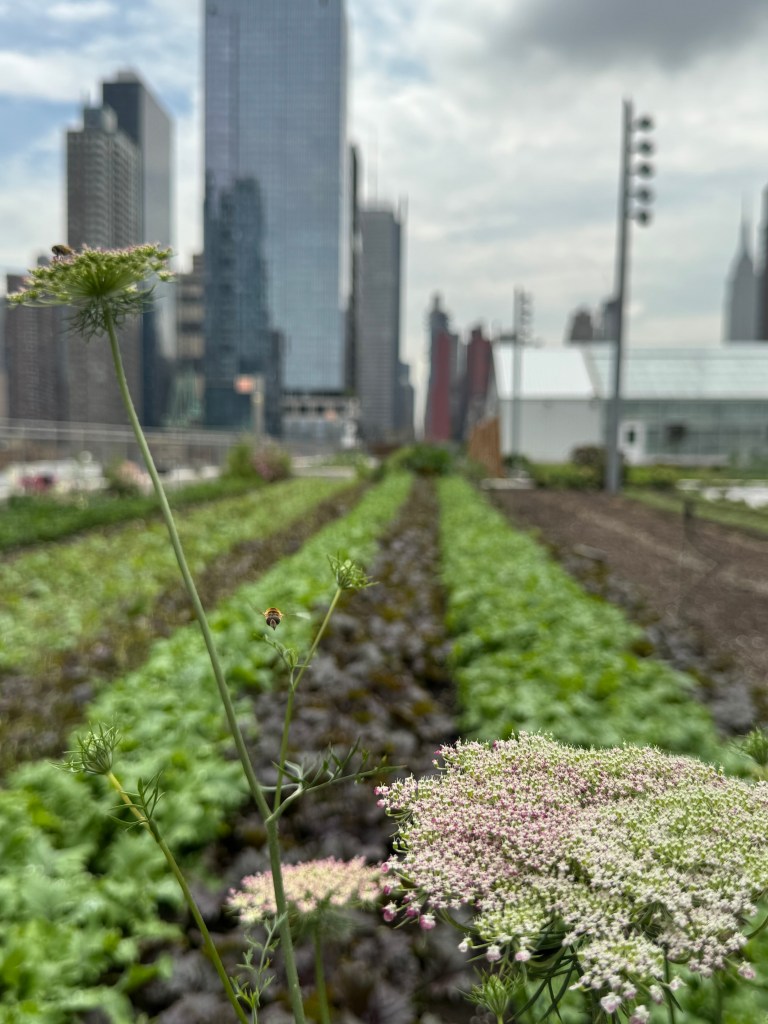
You don’t usually associate convention centers with sustainability, but the Javits Center changed that for me. On the outside, it looks like any other glassy building – but up top, there’s a green roof stretching across seven acres. It’s not just for show: this roof absorbs 80% of stormwater, houses more than 70 bird species, and doesn’t need much maintenance thanks to the sedum that grows there. There’s also a rooftop orchard with native plants, apple trees, and a greenhouse where even the lettuce is picked by request from the chef downstairs.
What stood out to me most was how much had to change structurally to make all this possible. The building literally had to be redesigned to carry the weight of life – of soil, plants, trees, and the systems needed to support them. It made me realize that sustainable design isn’t just about “adding green” on top. It’s about rethinking the bones of a place so it can hold more life – and more purpose.
Also: there are bee houses. Four of them. With European honeybees doing their thing among the flowers, right above the chaos of Manhattan.

Newtown Creek: What Happens After You Flush
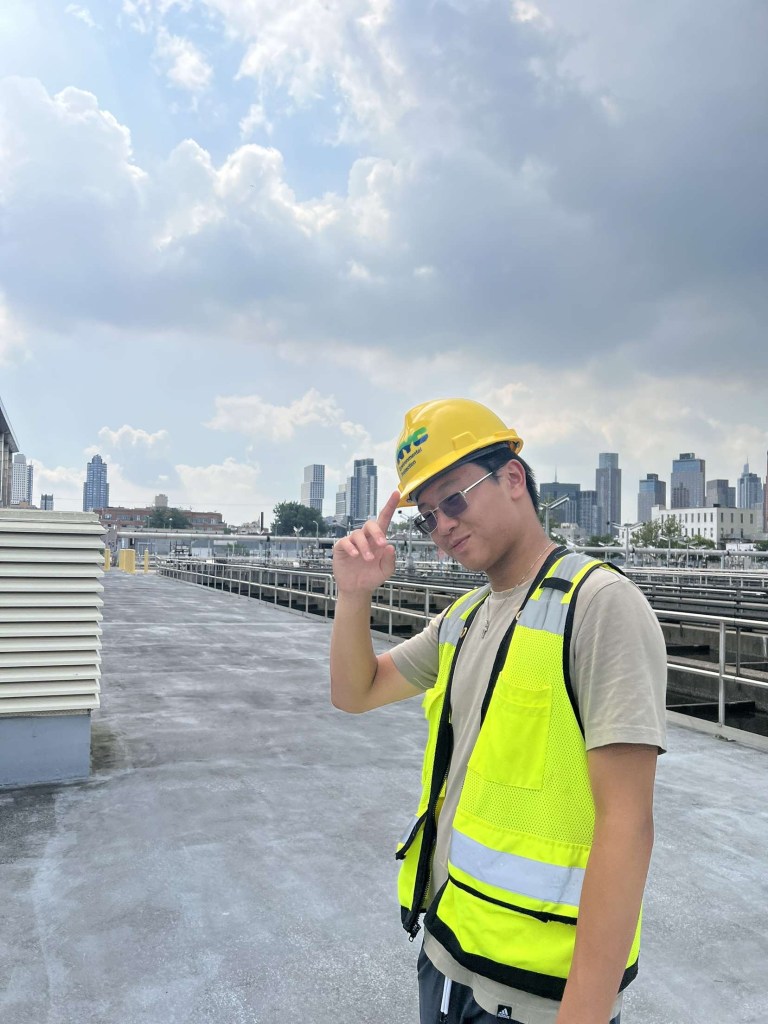
The second field trip brought us to Newtown Creek – NYC’s largest wastewater treatment plant. I’m not going to lie, I didn’t expect to be inspired by sewer systems. But it was kind of incredible.
This single facility treats 300 million gallons of wastewater a day. And what stuck with me is how invisible that process usually is. You flush, and it’s gone. But here, we walked through the steps – from the screening of giant debris to the tanks where bacteria break down organic matter, all the way to disinfection before the water is released again. It takes about 8 hours from start to finish.
Then there are the anaerobic digesters – those futuristic silver domes that process sludge and food waste to create biogas. It’s this closed loop that turns “waste” into something valuable, cutting down on emissions and even giving energy back to Brooklyn. That kind of circular thinking felt really powerful. Nothing was wasted unless we decided to waste it.
And again, sustainability didn’t just mean technology – it meant ecosystems. We talked about NYC’s water supply, fed by gravity through forests upstate. We saw how green infrastructure like rain gardens helps reduce sewer overflows and supports urban biodiversity. We even learned how clogs, known as “fatbergs”, (yes, from cooking grease) can trigger overflows that damage both city infrastructure and nearby ecosystems.

The Bigger Picture
In both trips, the message was clear: sustainability isn’t about doing one thing perfectly. It’s about doing a lot of things better – together. Stronger roofs, smarter waste systems, more thoughtful energy use, cleaner water, more green space, healthier cities. And most of all, it’s about designing with people and nature in mind, side by side.
I used to think environmental design was mostly for architects and engineers. But this class showed me that storytelling, observation, and systems thinking are just as important. I’m learning how to think like a designer – not because I want to build buildings, but because I want to help shape ideas, questions, and choices that lead to something better.
I’m grateful for the chance to study with Dr. Barratt and my classmates – all of us from different states and countries, coming together in one room to figure out what kind of future we want to design. And more importantly, how we want to design it.
 Unwrapped Earth
Leave a comment